
Rock Hill, SC · Garage Door Service
Is Your Rock Hill Garage Door Worth Repairing, or Time to Replace
Rock Hill homes mostly date to the 1980s and 90s, with a wider span back to 1960. Here's how that age and our winter cold shape repair-or-replace calls.
- Repairs & new doors
- Springs & openers
- Serving 8 nearby communities
What Local Conditions Do
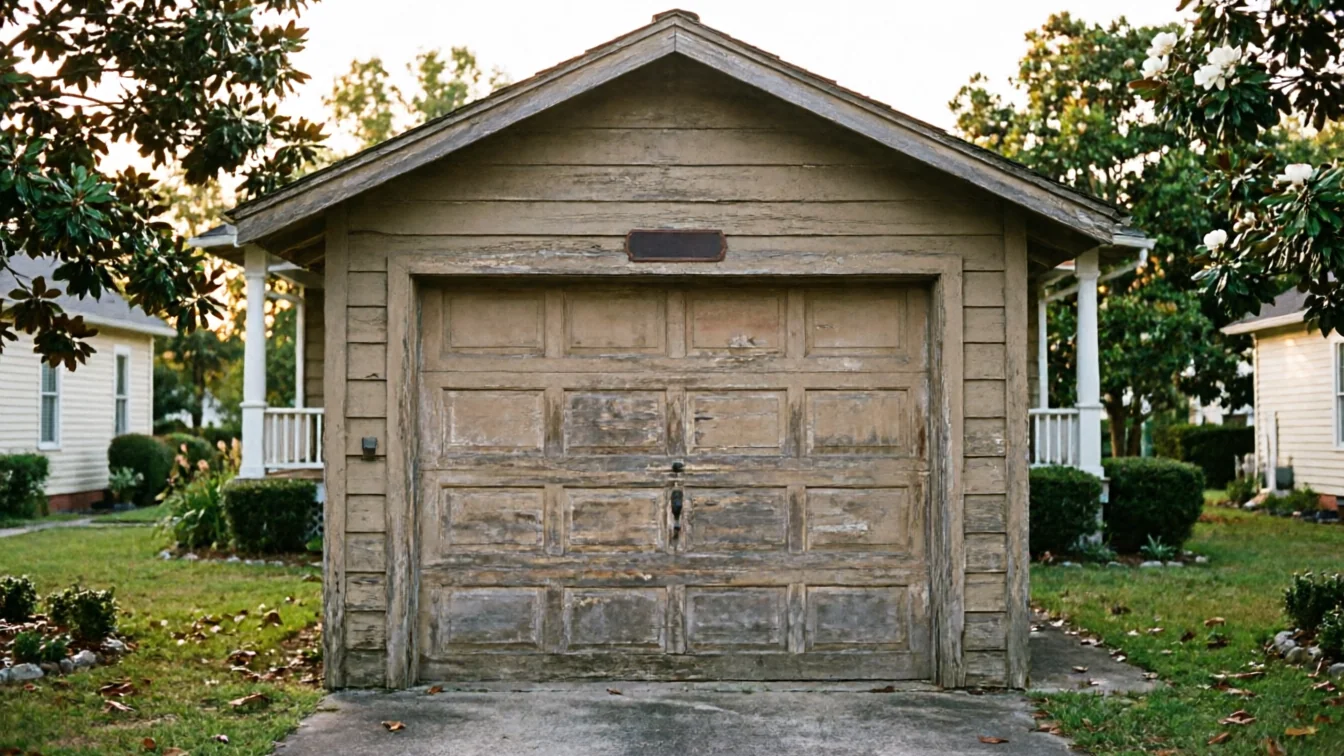
Most of the housing stock around Rock Hill went up between 1960 and 2006, with the median build year landing around 1992. That puts a lot of doors squarely in the 1980s and 90s generation of hardware - galvanized torsion springs rated for a certain cycle count, steel tracks that weren't always sealed against moisture, and openers that are two or three product generations behind what's sold now. We see this pattern repeat across the fourteen neighborhoods we cover, from Newport and India Hook close in to Lesslie and Riverview a few miles out.
Our winters sit in a cold-moderate band, not extreme, but enough that temperature swings matter. A torsion spring that's been cycling for twenty-five years loses tension faster once nighttime lows start dropping and climbing again through a season. It's not that the cold breaks the spring outright - it's that cold metal is less forgiving of fatigue that's already built up. On a door installed in 1990, that fatigue has had three decades to accumulate.
This matters for the repair-or-replace call because it tells you what you're actually working with before a tech even gets there: an older torsion system under seasonal stress, not a brand-new door with a single bad part.
What You Pay
We're not going to put a number here that doesn't hold up once a tech sees your actual door, so we won't guess at a figure. What we can tell you is what drives the cost up or down: whether the spring is torsion or extension, whether the drum and cable are original to a 1980s-90s install (and therefore need matching to older bolt patterns), and whether the opener is still serviceable or past the point where parts exist for it.
A single broken spring on a door that's otherwise sound is usually the cheapest call we make. A door where the spring, the rollers, and the opener are all original to a build from that same era starts adding up fast, because you're not fixing one thing - you're catching up thirty years of wear in one visit.
The honest answer is that we have to look at the door. Anyone quoting a number over the phone for a door they haven't seen is guessing, same as we'd be.
When It Stops Being a DIY Job
A torsion spring under tension can put someone in the hospital, and that doesn't change no matter how old or new the door is. But there's a specific reason this is more of an issue on the housing stock common here: doors built in the 1980s and 90s often used torsion hardware that's no longer a stock size, which means even a confident DIYer with a spring-winding bar can end up with mismatched parts under load.
If your door is cycling rough, if the cable has started to fray, or if the opener is grinding before it lifts, that's past the point of a tutorial video. Cold weather makes worn hardware less predictable, not more, so a marginal spring that's held on through three mild winters can let go on the first hard cold snap.
We'll say plainly: changing a bulb, tightening visible bolts, lubricating rollers - fine, do that yourself. Winding or unwinding a torsion spring, or pulling an opener that's wired into a GFCI circuit you're not sure about, is where we'd tell you to call instead.
The Situation
Across the roughly 26,654 households in the areas we serve, about 17,164 are owner-occupied houses, and a good share of those sit on the same 1980s-90s hardware we keep describing. That's true whether you're in Baxter Village or Tega Cay close to town, or further out toward Lake Wylie, York, or Clover. The doors are old enough now that original parts are the exception, not the rule, and that's the single biggest factor in whether a repair makes sense or whether replacement is the better money.
We won't tell you every old door needs replacing - plenty of them just need a spring, a cable, and a tune-up, and they'll run another decade fine. But a door that's failing in two or three places at once, on a house built before 2000, is usually past the point where patching it piece by piece is the cheaper path. That's the judgment call we make on-site, not over the phone.
Frequently asked questions
My garage door opener is original to the house - is it worth replacing just the opener?
If the door and hardware are otherwise sound, yes, replacing just the opener can make sense, especially on a house from the 1980s-90s stock common here where the original unit is well past its expected service life. We'd check the rail, the drive, and the door's balance first, since an opener struggling against bad springs will wear out again fast.
Does Rock Hill's winter weather actually affect garage door springs?
Our climate here is cold-moderate, not extreme, but repeated cold-to-mild swings do stress metal that's already fatigued. On a spring with twenty or more years of cycling, a hard cold snap is often what finally causes it to let go, even though the cold itself isn't severe by national standards.
How do I know if my door is original to the house?
If the house dates to the common local range of the 1960s through 2006 and you've never had the door replaced, it's likely original. Look for a manufacture date sticker on the inside of a panel, or have a tech check the spring and track hardware, which often reveal the install era even without a label.
Related garage door services in Rock Hill
More garage door guides
Book garage door service in Rock Hill
Call now or request a quote - tell us what the door is doing and where you are.