
Rock Hill, SC · Garage Door Service
Doors on Houses Built Before Insulation Rules Caught Up
Rock Hill homes built before 1980 often still run single-layer steel doors. Here's what that costs you in a cold-moderate climate and when it's worth swapping.
- Repairs & new doors
- Springs & openers
- Serving 8 nearby communities
What Local Conditions Do
Rock Hill's housing stock runs from 1960 up through 2006, with the median build year sitting at 1992 and most of the neighborhoods we see clustering in the 1980s and 90s across the fourteen named areas we work. That split matters for garage doors more than most people think. Homes from the early end of that range - the 1960s and 70s builds mixed into the older neighborhoods - mostly went up before insulated steel doors were standard practice, so a lot of them still carry the original single-layer panel or a replacement that copied it without adding a foam core. Homes from the 80s and 90s wave usually came with doors that at least had some insulation built in, because by then it was common enough to be the default rather than the upgrade.
We're in a cold-moderate climate band here, not deep freeze, but cold enough that a garage with an uninsulated door runs noticeably colder than one next door with a foam-core panel. That's not a dramatic difference on a 50-degree day. It shows up in January, when the slab holds cold and an uninsulated door does nothing to slow it down. If your house sits on the older end of that build range, there's a decent chance your door is original to that era or close to it.
What You Pay
We don't have a price list we can quote here without a fact behind it, so we won't make one up. What we can tell you is that the decision tends to track with the house's age more than with anything cosmetic. A single-layer steel door on a house from the earlier part of our 1960-2006 build range is usually the cheaper door to replace outright, because there's less door to build - no foam, no second skin, no thermal break. An insulated door costs more upfront and makes more sense if the garage is attached, used as a workspace, or backs onto a room you heat.
Median household income across our service area runs $86,500, and with 17,164 owner-occupied houses out of 26,654 households total, a lot of the calls we get are from people who've owned the house long enough to know exactly how cold that garage gets in the winter and have decided it's worth fixing instead of living with it. We'd rather tell you to wait on a quote until we've seen the door than guess at a number that doesn't apply to your situation.
When It Stops Being a DIY Job
Swapping weatherstripping or bottom seal on an old single-layer door is a reasonable weekend job. Replacing the whole panel set, retrofitting insulation into an existing door, or dealing with the track and spring adjustments that come with a heavier insulated replacement door is not - the weight changes, and a torsion spring sized for a lightweight 1970s door will not safely lift a modern insulated one. That's a cable-off-the-drum, finger-near-the-spring kind of mistake, and we see the results of it more than we'd like.
One honest limit here: if your door is original to a 1960s or 70s build and the track hardware is as old as the door, we often can't just bolt a new insulated panel onto it. The whole system - track, springs, opener mounting - usually needs to come up to spec with the new door's weight. That's a bigger job than a panel swap, and we'll say so before we start rather than after.
The Situation
If you're in Newport, India Hook, Lesslie, Riverview, Baxter Village, or Tega Cay - all within five to seven miles of the center of town - or further out toward Lake Wylie, York, McConnells, Richburg, Clover, Fort Lawn, Eureka Mill, or Chester, the same pattern holds: houses from the earlier end of our 1960-2006 build range are the ones most likely running a door that predates insulation being standard, while the 80s and 90s wave mostly got it built in from the start. Knowing which decade your house falls into tells you more about your door than a visual inspection from the driveway ever will.
We work across this whole service area, and the call we get most from the older homes is the same one: the door looks fine, but the garage never warms up. That's not a broken door. It's a door built for a different set of rules.
Frequently asked questions
How do I know if my garage door is insulated?
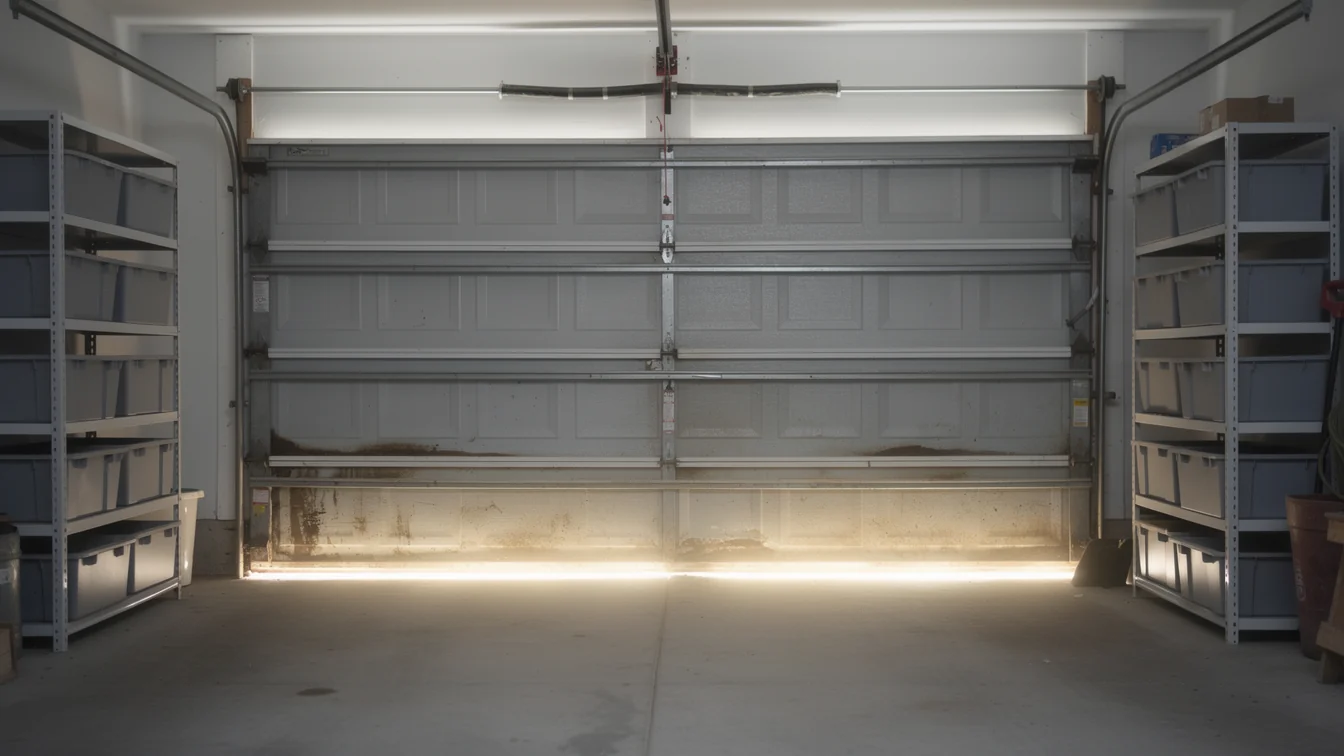
Check the back of the panel from inside the garage. An insulated door has a foam layer and usually a white or light-colored interior skin. A single-layer steel door is bare metal on the inside with visible ribbing and nothing between the layers. If your house was built in the 1960s or 70s, assume it's single-layer until you check.
Is it worth insulating an old garage door instead of replacing it?
Sometimes, if the door and track are in good shape otherwise. Insulation kits add an R-value but they don't fix worn seals, bent track, or hardware sized for the old door's weight. If the door's near the end of its life anyway, replacing it with an insulated panel usually makes more sense than retrofitting.
Why does my garage stay cold even with the door closed?
In our climate band, an uninsulated single-layer door does almost nothing to hold heat or block cold. That's most common on houses from the earlier part of Rock Hill's build range, before insulated doors were the standard choice rather than the upgrade.
Related garage door services in Rock Hill
More garage door guides
Book garage door service in Rock Hill
Call now or request a quote - tell us what the door is doing and where you are.