
Rock Hill, SC · Garage Door Service
New Garage Door Installation for Baxter Village, SC
New garage door installation in Baxter Village, SC: homes built since 2006 get insulated steel doors sized for double garages, installed from Rock Hill.
- Repairs & new doors
- Springs & openers
- Serving 8 nearby communities
The Complications
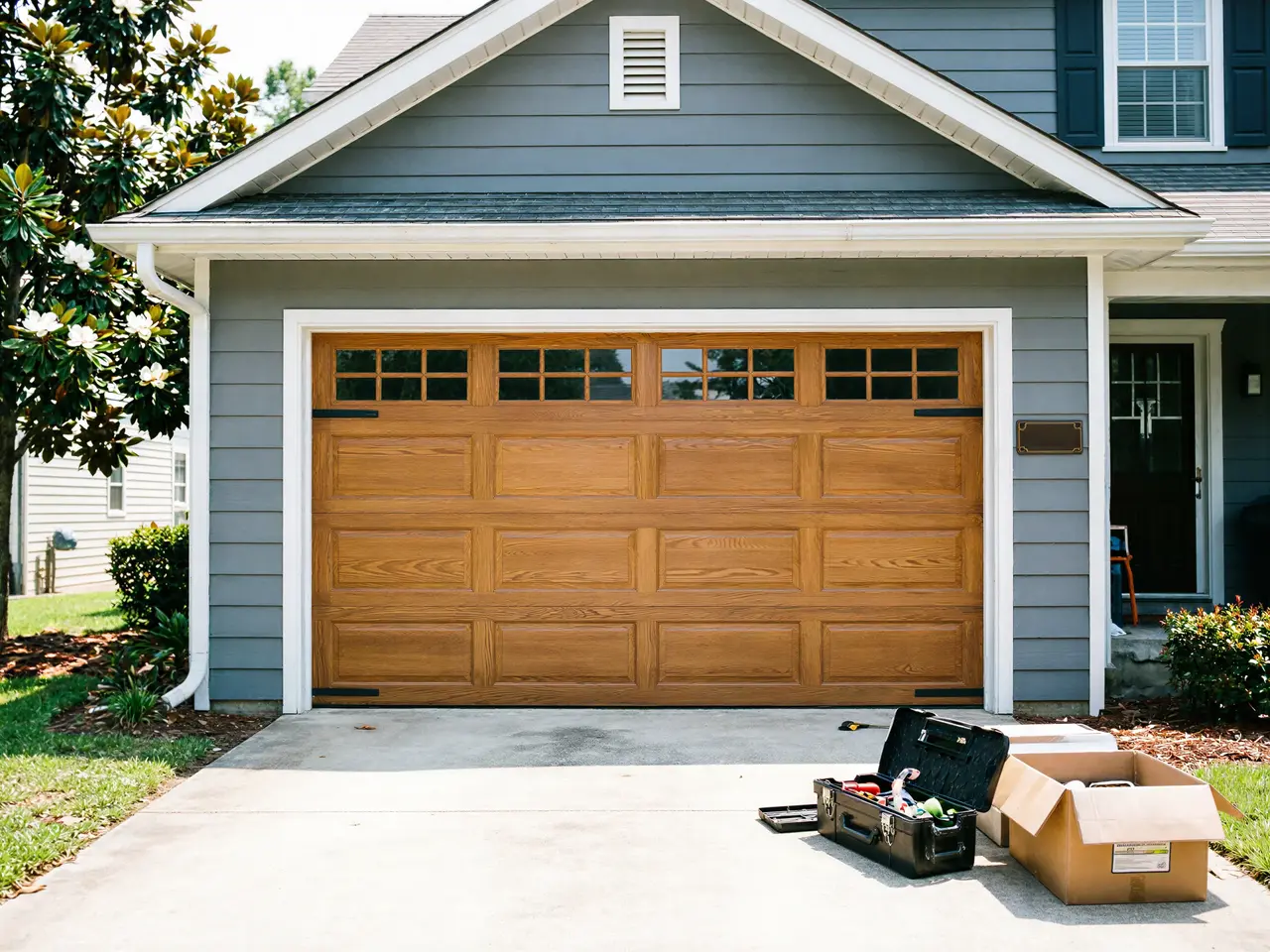
Start with what's actually hanging in these openings. Baxter Village's housing stock centers on a median build year of 2006, nearly four decades newer than the 1960s-era homes found elsewhere in the Rock Hill service area. That means most garages here were built for two cars from day one - wider openings, factory-insulated steel sections, and door heights sized for taller modern vehicles rather than retrofitted onto an older frame. The complication isn't matching a mismatched opening the way you might in an older neighborhood. It's that builder-grade doors from the early 2000s were often the cheapest option the developer could spec, and at a median household income of $146,440 - well above the $86,500 median across the rest of the service area - a lot of owners here are ready to replace a thin, dent-prone panel with something heavier, better insulated, and quieter. The other wrinkle is opener compatibility. A door this age almost always already has a photo-eye safety sensor setup, but the opener itself may be the same unit from the original build, and a new door sized even slightly differently in height can throw off travel limits that need resetting on install day.
The Symptom
In a neighborhood this age, the symptom usually isn't a door that's failed outright - it's a door that's starting to look and sound tired next to houses around it that have already been upgraded. Builder-grade steel panels from the early 2000s dent easily and dent visibly, since the gauge used in spec-grade doors is thinner than what gets installed today. Insulation in these original doors is often a thin foam layer rather than the thicker polyurethane core now standard, so owners notice the garage running hotter in summer and colder in the winter months we get here. The opener is the other tell: a unit installed with the house in 2006 is now old enough that replacement parts are getting harder to source, and a new door is often the right moment to swap it rather than bolt new hardware to an aging motor. None of this is an emergency in the way a snapped spring is. It's wear that shows up as noise, a sag at the bottom panel, or a door that no longer closes flush - small signs that it's time to replace rather than patch.
How Long You Are Without the Door
A new installation isn't a same-day emergency call, so plan around lead time rather than a rush. Once you've picked a door, ordering insulated steel panels and a matched opener takes the material lead time you'd expect for any special-order door - this isn't stock sitting on a shelf in every size. The actual install day, once the door and hardware are on site, typically runs the better part of a day: old door and track come out, new jamb hardware goes in square, springs get wound to the correct tension for the new panel weight, and the opener gets mounted and tested against the photo-eye sensors. The trip from Rock Hill is seven miles - the same distance as nearby Tega Cay - which keeps scheduling straightforward rather than a logistics problem. Where the timeline stretches is if the existing framing needs correction to square up an opening that's shifted slightly since 2006, which adds time on install day itself rather than to the wait beforehand.
Can You Do This Yourself
Be honest with yourself about the springs before you touch anything. A double garage door built to the sizes common in this neighborhood is heavy, and the torsion springs that counterbalance it are wound under enough tension to cause serious injury if released wrong. Swapping panels, resetting track, and rewinding springs on a door sized for a 2000s-era two-car garage is not the same job as a smaller single door on an older house. Where a homeowner can reasonably do their own work is cosmetic - repainting trim, swapping weatherstripping, adjusting a remote's programming. Where it isn't worth the risk is anything involving the spring system, the cable drums, or resetting opener travel limits on a new unit, since a misjudged step there can snap a cable or drop a door section. We won't talk anyone out of DIY on the small stuff. On the spring and track side of a full door swap, it's not a place to learn by doing.
What Causes It Around Here
The service area sits in a cold-moderate climate band, and that matters more for the door's weatherstripping and seals than for the steel itself. Houses built around 2006, like most of what's in Baxter Village, haven't had the decades of seasonal expansion and contraction that the 1980s-and-90s stock common elsewhere in the service area has already been through - so settling-related track misalignment is less of an issue here than it is in older neighborhoods. What does show up is seal wear: the bottom astragal and side weatherstripping on a factory door degrade over fifteen-plus years of winter cold and summer heat cycling, letting in draft and moisture even when the panel itself is structurally fine. That's often the actual driver behind a replacement decision here - not a cracked panel, but a door that's aged out of its weather seal and is costing more in heating and cooling than it should for a house this age.
What Is on the Truck
For installs in this part of the service area, the truck carries stock sized for the wider double-door openings typical of 2000s-era construction here, plus insulated steel panels in the gauge and core thickness that holds up better than the thinner builder-grade originals. Torsion springs come in a range rated for the heavier weight of an insulated door versus the lighter non-insulated panels these houses were originally built with, since using an old door's spring rating on a new heavier door is a common and avoidable mistake. Openers on the truck include current models with factory photo-eye safety sensors built in, which matters since code around those sensors hasn't gotten any looser since these houses were built. What's not standard inventory is anything load-bearing custom to an opening - if framing has shifted or an opening is nonstandard, that gets measured and ordered rather than pulled off the truck on the spot.
Frequently asked questions
Are garage doors in Baxter Village a different size than in older parts of the service area?
Often, yes. Baxter Village's housing stock runs newer - a median build year around 2006 - and homes from that era were built with two-car garages and wider openings from the start, unlike the smaller single-door openings common in the 1960s-era stock elsewhere in the Rock Hill service area.
How long does a new door take once I order it?
Material lead time for a special-order insulated steel door and matched opener takes longer than a stock swap, since these aren't shelf items in every size. Install day itself, once the door arrives, typically runs most of a day for removal, new track, spring winding, and opener setup.
Do I need a new opener too, or just the door?
If your opener dates to the original 2006-era build, it's old enough that parts are getting harder to find, and a new heavier insulated door often needs the travel limits reset anyway. Replacing both at once avoids bolting new hardware to an aging motor.
Can I install a new garage door myself to save money?
The cosmetic parts, sure - trim, weatherstripping, remote programming. The spring and cable side of a full door swap is a different story: a double door sized for a 2000s-era garage carries enough spring tension to cause real injury if wound or released incorrectly. That part isn't worth the risk.
More garage door services in Baxter Village
Book garage door service in Rock Hill
Call now or request a quote - tell us what the door is doing and where you are.